Minimalist Bedroom Design: Less is More (And Why It Actually Works)
Minimalism gets a bad rap. People hear "minimalist bedroom" and picture a cold, sterile space that looks like a hospital room. All white. Zero personality. Nowhere to sit.
But that's not minimalism. That's emptiness.
Real minimalism? It's intentional. It's warm. It's about keeping what matters and cutting what doesn't.
And when it comes to bedrooms — the one space in your home designed entirely for rest — minimalism might be the smartest design choice you'll ever make.
Why Minimalist Bedrooms Actually Help You Sleep Better
Here's the thing about clutter: your brain sees it as unfinished work.
Every item on your nightstand, every pile of laundry on the chair, every stack of books you keep meaning to read — your subconscious registers all of it as tasks. And tasks? They keep your nervous system on alert.
You can't fully relax in a space that's screaming "there's stuff to do."
Minimalist bedrooms remove the noise. They give your brain permission to rest.
Studies back this up. People who sleep in clutter-free, simplified bedrooms report:
- Falling asleep faster
- Sleeping more soundly
- Waking up feeling more refreshed
It's not magic. It's just removing the mental load.
The Core Principles of Minimalist Bedroom Design
1. Essential Furniture Only
Ask yourself: What do I actually need in this room?
- A bed (obviously)
- Nightstands (one on each side, or one if you sleep solo)
- A dresser or closet for clothes
- Maybe a chair if you have space
That's it.
No extra bench you never sit on. No decorative ladder holding blankets you don't use. No random side table collecting dust.
If it doesn't serve rest or storage, it doesn't belong.
2. Clean Lines, Neutral Tones
Minimalist bedrooms lean on:
- Whites and soft grays for walls
- Natural wood tones for warmth (walnut, oak, light birch)
- One or two accent colors (black, charcoal, beige)
The palette is calm, not boring. Intentional, not bland.
Clean lines (no ornate headboards, no fussy furniture) keep the eye moving smoothly. There's nothing to catch and hold your attention.
3. Hidden Storage = Clear Surfaces
The trick to a minimalist bedroom isn't owning less stuff. It's hiding the stuff you do own.
- Nightstands with drawers (not open shelves)
- Under-bed storage for off-season clothes
- Closets with organizers so everything has a home
If your surfaces are clear — nightstands, dresser, floor — your bedroom instantly feels calmer.
4. One Statement Piece
Minimalism doesn't mean no personality. It means intentional personality.
Pick one thing:
- A large piece of art above the bed
- A beautiful pendant light
- A single sculptural plant (fiddle leaf fig, monstera)
That one piece becomes the focal point. Everything else supports it.
5. Quality Over Quantity
In a minimalist bedroom, you can't hide behind clutter. Every piece matters.
So invest in:
- A bed frame you actually love (not the cheapest option)
- High-quality bedding (linen or organic cotton, not scratchy polyester)
- A good mattress (you spend a third of your life on it)
When you have fewer things, the things you do have need to earn their place.
What a Minimalist Bedroom Looks Like in Real Life
Let's walk through a real minimalist bedroom transformation.
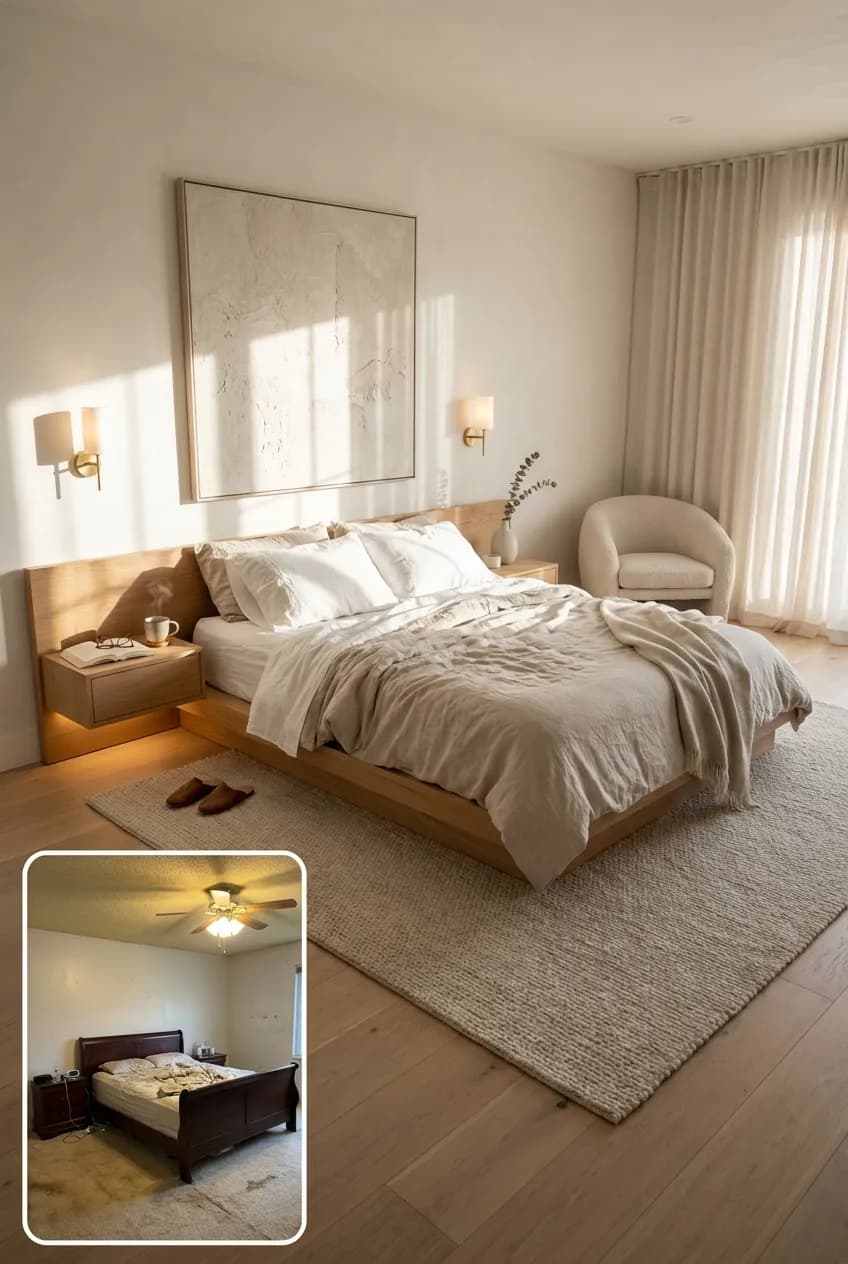
The Before
- Queen bed with dated wood frame
- Two mismatched nightstands
- Dresser covered in random items (old perfume bottles, loose change, receipts)
- Piles of clothes on a chair
- Overhead light, no lamps
- Blank white walls, no art
Not terrible. But not restful.
The After
- Low-profile platform bed in walnut
- Two matching nightstands (simple, one drawer each)
- Dresser cleared completely (everything inside drawers)
- Clothes put away (chair removed)
- Bedside lamps with warm bulbs (overhead light barely used)
- One large abstract print above the bed
- One potted plant on the dresser
Same room. Completely different energy.
The "before" felt cluttered, even though it wasn't that bad. The "after" feels calm. Intentional. Like a place designed for rest, not storage.
Common Minimalist Bedroom Mistakes (And How to Avoid Them)
Mistake #1: Making It Too Cold
The Fix: Add warmth with:
- Wood tones (headboard, nightstands, flooring)
- Textured bedding (linen, waffle weave, chunky knit throws)
- Warm lighting (2700K bulbs, not cool daylight)
Mistake #2: Zero Personality
The Fix: Choose one or two personal touches:
- A favorite piece of art
- A plant you love
- A beautiful book on the nightstand
Minimalism isn't about erasing yourself. It's about editing to what matters.
Mistake #3: Sacrificing Function for Aesthetics
The Fix: Make sure your nightstand has a drawer. Keep a charging cable within reach. Have a reading lamp.
Minimalism should make your life easier, not harder.
How to Start (Without Throwing Everything Away)
You don't have to purge your entire bedroom overnight. Start small:
Week 1: Clear Surfaces
- Remove everything from your nightstands and dresser
- Put back only what you use daily
Week 2: Hidden Storage
- Get drawer organizers
- Move items off surfaces into storage
Week 3: Edit Decor
- Remove half your wall art
- Keep only your favorites
Week 4: Upgrade One Thing
- Invest in better bedding, a new lamp, or a quality piece of furniture
By the end of the month, your bedroom will feel completely different.
See Your Bedroom in Minimalist Style
Curious what your bedroom would look like as a minimalist sanctuary?
You don't have to imagine it.
With Decorra, you can upload a photo of your current bedroom and see it transformed into a minimalist retreat in seconds.
- Same room
- Same layout
- Same windows
Just cleaner, calmer, and designed for rest.
No guessing. No mood boards. Just your actual space, reimagined.
👉 See your minimalist bedroom now — try free
Because minimalism isn't about having less. It's about making space for more — more peace, more rest, more clarity.
And your bedroom? That's where it starts.